The Zero-Click Era: What Web Site Owners, Marketers & PR Professionals Need to Know
If you’ve noticed a drop in direct website visits from search engines over the past year or two, you’re not alone. Your content team might still be publishing great articles, and your SEO reports might show strong visibility, yet fewer people are clicking through to your site.
Welcome to the era of Zero-Click Search.
What Is a Zero-Click Search?
A zero-click search occurs when a user enters a query into a search engine (like Google) or an AI assistant (like ChatGPT or Perplexity), gets the exact answer right on the results page, and closes the tab—without clicking on a single website links.
In the past, search engines acted as digital signposts, directing users to your blog, landing page, or case study. Today, through AI Overviews, featured snippet boxes, interactive panels, and Answer Engine Optimization (AEO), search engines have become answer hubs. They read your content, extract the key facts, and present the answer directly to the user.
How Much Website Traffic Has Dropped? (The Hard Data)
For anyone who rely on organic website traffic to demonstrate campaign success, this shift presents a major challenge:
- Over 58% of Google Searches End Without a Click: According to a landmark study by Rand Fishkin at SparkToro analyzing US and EU search data, 58.5% of all Google searches now end without a click to the open web. Less than 36% of searches result in organic web clicks.
- The Rise of AI Answers: Data from Gartner predicts that organic search engine traffic to websites will drop by 25% in 2026 as users embrace AI chatbots and conversational search engines over traditional link lists.
- Search Clicks Are Concentrated: Even when users do click, top-of-funnel informational traffic is declining rapidly because quick “what is” and “how to” queries are answered instantly in SERP (Search Engine Results Page) boxes.
The Good News for Marketing & PR Efforts
Zero-click searches don’t mean your web site and PR efforts are wasted—it simply changes where your value is delivered. When your brand appears as the cited source in an AI summary or in “Position Zero” (the top featured snippet), you earn massive brand awareness, credibility, and authority, even if the user doesn’t click immediately.
Top 10 Things to Do to Improve Website Visibility in a Zero-Click World
To maintain brand authority and capture high-intent audiences when traditional web traffic is harder to secure, here are 10 actionable strategies to adapt your site for SEO, AEO (Answer Engine Optimization), and GEO (Generative Engine Optimization):
1. Structure Content with Bottom-Line Up Front (BLUF)
Place concise, 40–60 word answers directly beneath your section headers. Search engines and AI models look for clear, standalone definition blocks to pull directly into search snippets and AI Overviews.
2. Match Your Formatting to Snippet Types
Organize data into native HTML tables, numbered steps, and bulleted lists. AI models and search crawlers favor scannable, structured content when extracting quick answers.
3. Build Non-Branded Destination & Contextual Content
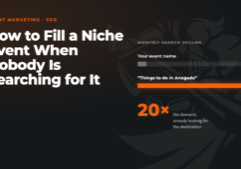
Instead of optimizing solely for low-volume product names, create guides around broader topics your target audience is already searching for. For instance, a Broadsword case study demonstrated that building utility travel guides on Drowned Island Challenge and Caribbean Event Funnel captured high-intent visitors who were searching Anegada, successfully driving 28.5% of total site traffic with zero ad spend.
4. Optimize for High-Intent “Bottom-of-Funnel” Queries
While general “how-to” queries suffer high zero-click rates, users searching for comparisons (e.g., “Brand A vs. Brand B”), pricing, or specialized use cases still click through because they are ready to make a decision.
5. Implement Structured Data (JSON-LD Schema)
Add FAQPage, HowTo, and Article schema markup to your site’s code. Schema provides search engines with direct, machine-readable blueprints of your page content, making it significantly easier for AI engines to index and cite your brand.
6. Create Companion Blog Posts for Static Pillar Pages
Connect dynamic blog posts to core landing pages or case studies. Linking an informational post to a main service or case study page establishes a “pillar-and-cluster” structure that passes authority and gives AI engines both a short answer block and a deep-dive source to cite.
7. Target Long-Tail Conversational Questions
Incorporate exact Q&A sections into your articles. AI assistants handle complex, multi-word queries (“query fanning”) by searching for precise sub-questions. Answering specific long-tail questions keeps your brand visible in conversational search results.
8. Optimize Google Business Profile & Drive Fresh Reviews
Your Google Business Profile is the ultimate zero-click real estate for local and brand discovery. Regularly post updates linked directly to educational blog posts or service landing pages, keep contact info 100% current, and actively gather fresh customer reviews. Search engines and AI overviews pull trust signals and sentiment directly from recent review text.
9. Optimize Your Brand for Entity & Citation Verification
Generative AI tools evaluate real-world authority and trust signals. Ensure you build consistent brand citations, press mentions, and updated profile pages across authoritative industry directories and news outlets (like Broadsword’s crisis management coverage on Hurricane Irma Communications and Virtual Show Event Production).
10. Maintain Content Freshness via Dynamic Publishing & Updates
Search engines and AI algorithms heavily favor recently updated content. Rather than letting static pages sit unchanged for years, establish a regular update schedule—refresh dates, add new statistics, and publish dynamic blog posts. Frequent updates signal active management to web crawlers and ensure your site is indexed as a live, authoritative resource.
References & Links
- Broadsword Communications: Drowned Island Challenge Case Study
- Broadsword Communications: Tourist-to-Competitor Funnel Strategy
- Broadsword Communications: Hurricane Irma Communications
- Broadsword Communications: BVI’s First Multi-Day Virtual Show
- SparkToro: Zero-Click Search Data Study
- Gartner Press Release: AI & Search Traffic Predictions
Read more on this topic: